
Kids and animals can be the best kind of magic together. A gentle purr, a wagging tail, a curious nose, and suddenly a shy child is smiling, speaking up, and reaching out. But confidence around animals does not always happen instantly. Some children feel nervous around dogs, startled by sudden movement, or unsure what to do with a kitten who darts away. The good news is that confidence is learnable, and when children learn safe, respectful ways to interact with animals, that confidence often spills into other parts of life too.
Whether your family already has a pet or you are preparing your child to be around animals at friends’ homes, parks, farms, or community events, this guide will help you build a strong foundation. We will focus on child friendly pet safety, reading animal body language, gentle handling, and positive experiences that support a child’s comfort and self assurance. You will also see simple ways to help children overcome fear of dogs, learn calm behavior around animals, and create a lasting bond based on trust.
Why confidence around animals matters
Confidence around animals is not just about pets. It is about learning emotional regulation, empathy, and communication. Animals respond to calm body language and consistent boundaries, which means children get immediate feedback in a gentle, real world way.
When kids learn safe interactions with dogs and cats, they often develop:
- Better self control and patience
- Stronger empathy and responsibility
- Improved social skills and communication
- A sense of competence, especially when mastering small tasks
- Reduced anxiety around unfamiliar situations
For children who feel unsure, building confidence around pets can be a powerful, supportive experience. For children who feel overly bold, it teaches respect, boundaries, and safety. Either way, it is a win.
Start with safety, because safety creates confidence
A child cannot feel confident if they feel unsafe, and adults cannot relax if they are worried about a bite or scratch. So the first goal is predictable, safe routines. This is the heart of pet safety for kids.
Choose the right animal situation for your child’s stage
Not every child needs to start with an excited puppy or a high energy dog at a busy park. Some children do best with a calm adult dog, a mellow cat, or even a small animal like a guinea pig. Confidence grows faster when the first experiences are positive and low pressure.
If your child is nervous, start with:
- A calm animal with a history of being gentle with children
- A quiet space where the animal can move away if needed
- Short sessions that end while the child still feels good
If your child is enthusiastic and impulsive, set the tone early:
- Slow movements
- Indoor voice
- Ask permission before approaching
- Hands to self until the adult says it is time
Teach the golden rule: let the animal choose
A powerful confidence builder is teaching kids that animals have choices. This reduces unpredictable moments and helps the child feel in control in a healthy way.
Try this: have your child stand sideways, keep hands low, and offer a relaxed open hand. If the dog or cat approaches, great. If not, that is also great. You can say, “Looks like she wants space right now. We can try again later.”
Kids learn that rejection is not personal and that respect builds trust.
Teach children to read animal body language
One of the biggest causes of fear is uncertainty. When kids understand what an animal is saying with its body, they feel safer. And when they feel safer, they act calmer. That calmness makes animals feel safer too. It becomes a positive loop.
Dog body language for kids, in simple terms
Explain that dogs talk with their ears, tail, face, and whole body.
Friendly signs often look like:
- Loose body, wiggly posture
- Soft eyes, relaxed mouth
- Tail moving in a gentle way
- Choosing to come closer
Signs a dog needs space:
- Stiff body, frozen posture
- Turning head away, avoiding eye contact
- Lip licking, yawning when not tired
- Tail tucked or very high and stiff
- Trying to move away or hide
Teach your child that “needs space” is not “bad.” It is communication.
Cat body language for kids, in simple terms
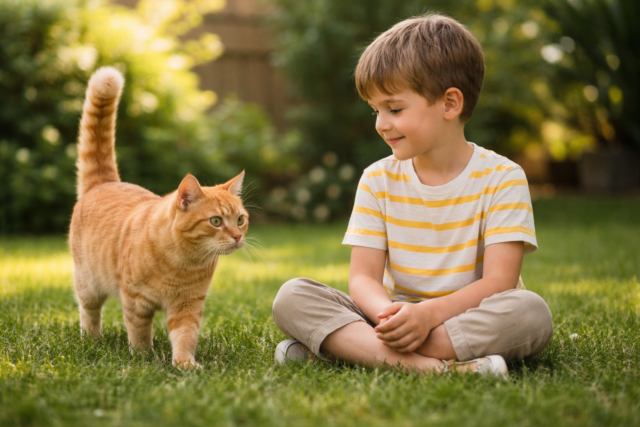
Cats can be affectionate, but many dislike surprise touch. Explain that cats like consent, just like people.
Comfort signs often look like:
- Slow blinking
- Relaxed whiskers and soft posture
- Tail gently curved
- Leaning in or rubbing
Signs a cat needs space:
- Tail whipping fast
- Ears flattened
- Skin twitching
- Moving away, hiding
- Growling or hissing
A helpful child friendly rule: if the cat moves away, we let the cat go.
Exactly five quick confidence builders you can start today
Use these as small daily practices. Each one takes only minutes but builds calm, predictable success.
- Practice the “pause and ask” habit: stop, ask the adult, then approach slowly
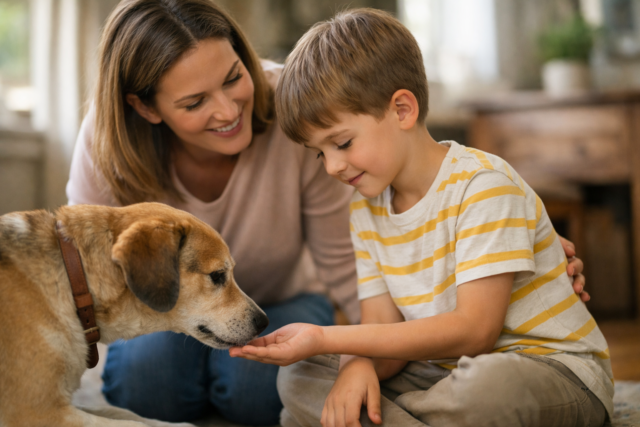
- Let your child offer a treat in an open palm while the adult holds the leash
- Teach “one hand petting” on the shoulder or chest, then stop and wait
- Make a quiet “animal hello” routine: sideways body, soft voice, gentle movements
- Have your child do one helpful pet job daily like filling water with supervision
Build confidence through gentle responsibility
Confidence grows when kids feel capable. Pet care tasks are perfect because they are real, measurable, and meaningful.
Choose age appropriate tasks that match your child’s maturity and the pet’s tolerance. The goal is success, not perfection.
Ideas that work well:
Ages 3 to 5
- Put a scoop of kibble in a bowl with help
- Place toys in a basket
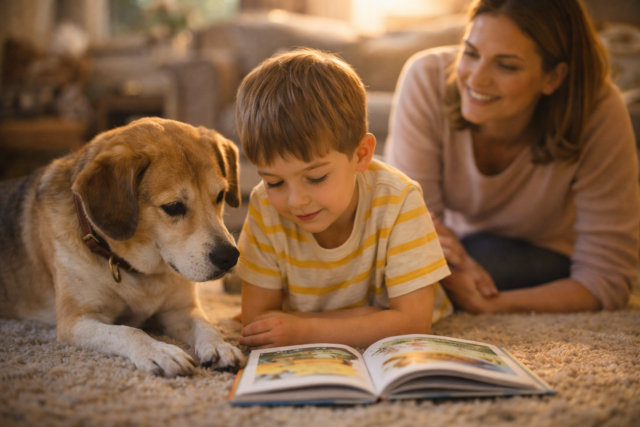
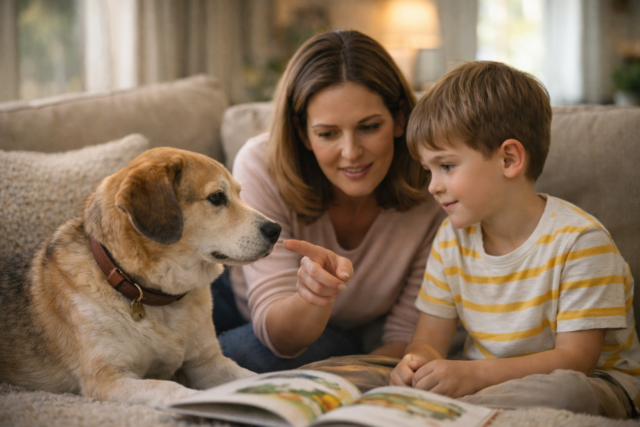
- Sit quietly and read a short book near the pet
- Help brush with one gentle stroke, then stop
Ages 6 to 9
- Fill water bowl
- Help with basic grooming like brushing for 30 seconds
- Practice simple training cues with adult support
- Help make a pet safe space cozy with a blanket
Ages 10 and up
- Assist with daily walks alongside an adult
- Prepare enrichment activities like a treat puzzle
- Track feeding schedule
- Learn more advanced training basics, kindness first
The key: praise effort and calm behavior, not bravery. Bravery is a result, not a demand.
If your child is afraid of dogs or cats
Fear is common, and it deserves patience. Many children have had a scary moment like a dog barking loudly, a pet jumping unexpectedly, or a scratch from a cat that did not want to be held.
Step 1: validate, then reframe
Instead of “Don’t be scared,” try “That bark surprised you. It makes sense that you feel nervous.”
Then reframe: “We can learn how to stay safe, and we can go at your pace.”
Step 2: start far away
Begin with distance. Watch dogs from across a park. Notice what calm dogs look like. Build familiarity without pressure.
A great exercise is “detective mode.” Ask your child:
- Is the dog’s body loose or stiff?
- Is it sniffing the ground or staring?
- Is the owner relaxed?
This gives your child a job and turns fear into curiosity.
Step 3: do controlled introductions
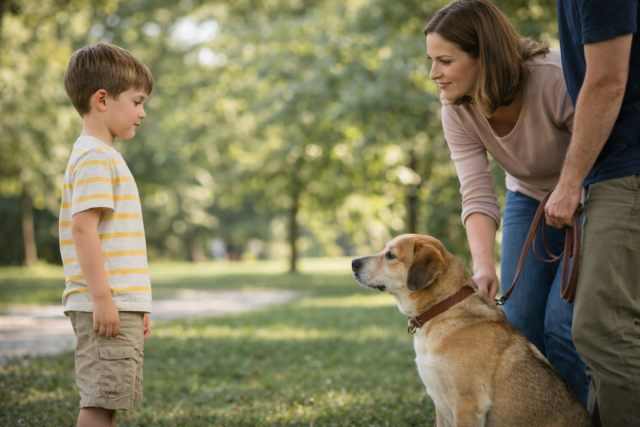
When ready, choose a calm dog with an experienced handler. Keep the dog leashed. Let the child stand sideways, hands low, and just observe. You are building comfort around animals, not forcing contact.
Step 4: celebrate small wins
A win might be standing closer, speaking calmly, or staying in the same space. Confidence is built from tiny steps stacked over time.
Teach gentle touch and respectful boundaries
Many kids think affection equals hugging, squeezing, or face to face contact. Some animals tolerate that, many do not. Teach kids that animals usually prefer calm, predictable touch.
A simple guideline: pet the side of the neck, chest, or shoulder area, not the top of the head, paws, tail, or belly unless the animal clearly enjoys it.
Also teach “two second touch.” Touch gently for two seconds, then stop and wait. If the animal leans in or stays close, you can continue. If the animal moves away, you are done. This is one of the best strategies for teaching children respectful pet handling.
Use training games to build confidence and calm
Training is not just for the animal. It is a confidence building activity for kids too. When a child asks for a “sit” and the dog sits, the child feels competent. The dog gets structure. Everyone wins.
Keep it positive and simple:
- Use tiny treats
- Keep sessions under five minutes
- End with success
- Avoid punishment or loud correction
For cats, training can be simple too. You can teach a cat to touch a target, come for a treat, or hop onto a perch on cue. Kids love seeing that cats can learn.
Make social situations safer and more predictable
Some of the toughest moments happen at someone else’s house. A dog runs to the door. Kids squeal. The dog jumps. Everyone gets overwhelmed.
Use a quick plan before entering:
- Child stays close to adult
- Hands down, no running
- Quiet voice
- Let the dog sniff first
- Ask the owner where the dog feels most comfortable
If a dog is excited, ask the owner to put the dog behind a baby gate or on a leash until things calm down. That is not rude. That is smart pet safety.
When to pause and get extra help
If your child’s fear is intense or your pet shows signs of stress, it is okay to ask for support. A qualified positive reinforcement trainer can help with dog introductions, jumping, barking, and leash manners. A pediatric therapist can help if anxiety is broader than animals alone.
Also, always supervise. Even the gentlest pet can react if startled, in pain, or overwhelmed. Supervision is not a lack of trust. It is part of being responsible.
Bringing it all together
Helping children build confidence around animals is a process of small, happy steps. Safety routines create predictability. Body language skills reduce uncertainty. Gentle responsibility builds competence. Respectful boundaries teach empathy. And fun, calm practice turns nervousness into comfort.
If you want to make the journey extra special, you can even celebrate milestones. First calm greeting. First gentle pet. First time giving a treat. First shared nap on the couch. Those moments become family memories, and they help children grow into kind, confident animal friends for life.