

Cats are adorable, mysterious, hilarious, and sometimes downright confusing. One minute your cat is rubbing against your legs like you are the center of the universe. The next minute, they are knocking something off the counter while staring straight into your soul. If you have ever wondered what your cat is really trying to tell you, this guide to cat behavior explained will help you understand the meaning behind the habits, signals, and strange little rituals your feline friend shows every day.
The truth is, most cat behavior is not random. Cats communicate through body language, routine, scent, sound, movement, and emotional cues. When you understand those signals, you become a better pet parent. You stop guessing. You start noticing patterns. And you build more trust with your cat.
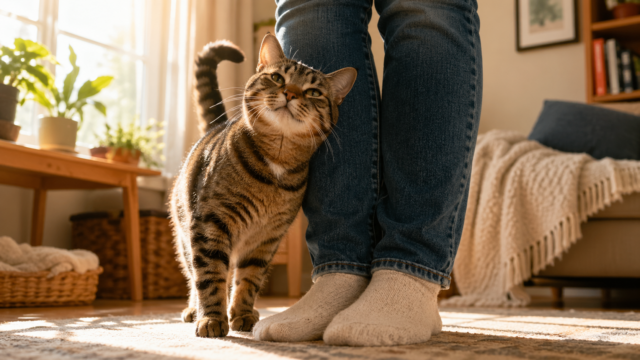
Cat Behavior Explained: Why Your Cat Rubs Against You
When your cat rubs against your legs, furniture, doorways, or even your face, they are usually marking something as safe, familiar, and connected to them. Cats have scent glands around their cheeks, chin, forehead, paws, and tail area. When they rub on you, they are leaving their scent behind.
This is not just affection, although it can absolutely be loving. It is also ownership, comfort, and security. Your cat is saying, “You belong in my world.”
If your cat rubs against you when you come home, that is often their way of reconnecting after your scent has changed from being outside. They are refreshing the bond. If your cat rubs their face against your hand or cheek, that is usually a high trust behavior.
This is also why cats may rub on new furniture, boxes, or bags. They are not being weird. They are making unfamiliar things smell familiar.
A cute custom cat portrait, personalized pet artwork, or cat themed keepsake from the Love Furry Babies Etsy shop can fit naturally into this emotional bond because cat people love celebrating the little habits that make their pets feel like family.
Why Cats Knead Blankets, People, and Pillows
Kneading is one of the sweetest cat behaviors, but it can feel strange if your cat is pressing their paws into your lap like they are making biscuits. This behavior usually starts in kittenhood. Kittens knead their mother’s belly to help stimulate milk flow. Many cats keep the behavior into adulthood because it is tied to comfort, safety, and contentment.
When an adult cat kneads a blanket, pillow, bed, or person, it often means they feel secure. Some cats purr while kneading. Some drool. Some seem almost hypnotized. That relaxed state is a good sign.
Cats may also knead to mark territory through scent glands in their paws. If your cat kneads your blanket, your sweater, or your lap, they may be saying that this place feels safe and familiar.
If your cat’s claws hurt while kneading, do not punish them. That would be ineffective and unfair because the cat is not trying to hurt you. Instead, place a thick blanket between your lap and their paws, keep claws trimmed, or gently redirect them to a soft throw.
This is a beautiful behavior to capture in photos, artwork, or memory pieces because it represents trust. For cats who have passed, a kneading photo or favorite blanket memory can also become part of a meaningful Paws Beyond the Rainbow memorial design.
[Internal link suggestion: Link “Paws Beyond the Rainbow memorial design” to your Paws Beyond the Rainbow page.]
Why Cats Purr and What Purring Really Means
Most people assume purring always means happiness. That is partly true, but it is not the full story. Cats often purr when they are relaxed, comfortable, and enjoying attention. A cat curled up beside you, blinking slowly, and purring softly is probably content.
But cats can also purr when they are stressed, sick, injured, or trying to calm themselves. Purring can be a self soothing behavior. That is why context matters.
Look at the whole cat, not just the sound. A happy purring cat usually has a relaxed body, soft eyes, normal breathing, and a loose tail. A stressed purring cat may hide, crouch low, avoid touch, breathe differently, refuse food, or seem unusually withdrawn.
Do not ignore purring if it comes with behavior changes. If your cat is purring but also not eating, hiding constantly, limping, vomiting, or acting weak, that is not a cute quirk. That is a reason to call your veterinarian.
Cat behavior explained properly means looking at the full picture. Purring is a clue, not a diagnosis.
Why Cats Bring You Toys, Bugs, or “Gifts”
When your cat brings you a toy, sock, bug, or unfortunate little creature, they may be showing hunting instinct, play behavior, or social bonding. Cats are natural hunters, even when they live indoors and have no need to hunt for survival.
Some cats bring toys to their humans because they want interaction. Others carry toys around while meowing because they are proud, excited, or seeking attention. If your cat drops a toy near you, that may be an invitation to play.
If your cat brings live or dead prey, it is not meant to disgust you. They are acting on instinct. Some behavior experts believe cats may see their humans as part of their social group and may be presenting the “catch” as a contribution.
The wrong response is yelling. That will not remove the instinct, and it can damage trust. The better response is to increase indoor enrichment through wand toys, puzzle feeders, climbing spaces, window perches, and structured play.
If your cat loves bringing toys, that personality trait can inspire a fun custom design, sticker, mug, or printable cat themed gift. Those small, personalized products are exactly the kind of emotional purchases pet lovers enjoy.
Why Cats Stare at You
A cat staring at you can mean several things. Sometimes it means affection. Sometimes it means curiosity. Sometimes it means they want food, play, attention, or access to a room you dared to close.
The eyes matter. A soft gaze with slow blinking is usually friendly. Slow blinking is one of the most powerful signs of cat trust. Many people call it a cat kiss. If your cat slowly closes and opens their eyes while looking at you, they are showing comfort.
A hard stare with a stiff body is different. That can mean tension, fear, overstimulation, or conflict, especially between cats. Dilated pupils, flattened ears, a twitching tail, or a low crouched posture can signal that your cat is uncomfortable.
If your cat stares at you around mealtime, do not overcomplicate it. They probably want dinner.
Why Cats Knock Things Off Tables
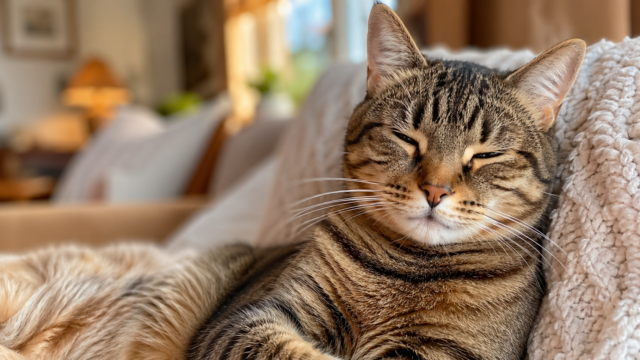
Cats knock things off counters, shelves, nightstands, and desks for three main reasons: curiosity, play, and attention. They use their paws to test objects. If something moves, rolls, falls, or makes noise, it becomes interesting.
Some cats learn very quickly that knocking something down gets a reaction from their human. Even a frustrated reaction can become rewarding attention.
If your cat keeps knocking things off the counter, the best fix is not yelling. The best fix is changing the outcome. Move breakable items, provide better enrichment, increase play sessions, and avoid rewarding the behavior with big dramatic reactions.
Cats are not being spiteful. That is a human interpretation. They are exploring cause and effect. They are also very good at training humans.
A cat who knocks pens off your desk while you work may need a play session before your busy hours. A cat who knocks things over at night may need more evening activity and a better sleep routine.
Why Cats Get the Zoomies
Cat zoomies are sudden bursts of wild energy. Your cat may sprint through the house, leap over furniture, race down the hallway, attack invisible enemies, or skid around corners like a tiny furry tornado.
This is normal, especially for young cats, indoor cats, and cats who need more exercise. Zoomies often happen after using the litter box, after a nap, or in the evening when cats naturally become more active.
Cats are crepuscular, which means they are often most active around dawn and dusk. So if your cat turns into a race car at 9 p.m., they are not broken. Their internal rhythm is doing what cat bodies do.
The problem is not the zoomies themselves. The problem is when your cat has no healthy outlet. If they do not get enough play, climbing, chasing, and mental stimulation, the zoomies can become destructive or stressful.
A structured play routine helps. Use a wand toy, let your cat stalk and chase, then allow them to “catch” the toy. Follow with a small meal or treat. That pattern mimics the hunt, catch, eat, groom, sleep cycle.
Why Cats Hide
Hiding is one of the most important cat behaviors to understand. Cats hide when they are scared, overstimulated, tired, sick, injured, adjusting to change, or simply seeking privacy.
Some hiding is normal. Cats like cozy spaces. A cat who naps under the bed or curls inside a box may just enjoy a secure resting spot.
But sudden hiding is different. If a normally social cat starts hiding for long periods, avoids food, stops using the litter box, or acts painful, take it seriously. Cats are very good at masking illness. Hiding can be one of the first signs that something is wrong.
Changes in the home can also trigger hiding. New pets, guests, moving furniture, loud noises, construction, travel, or a new baby can all make a cat retreat.
Give your cat safe spaces. Do not drag them out. That breaks trust. Instead, make hiding areas comfortable and predictable. Offer food, water, litter access, and calm interaction nearby.
[Internal link suggestion: Link “pet anxiety and behavior tips” to a future Love Furry Babies article about helping nervous pets feel safe.]
Why Cats Meow So Much
Meowing is mainly a cat to human communication tool. Adult cats do not usually meow at each other the same way they meow at people. Your cat may meow because they want food, attention, play, help, access to a room, or because they have learned that meowing gets results.
Some cats are naturally more vocal. Siamese, Bengals, Oriental Shorthairs, and some mixed breed cats can be very talkative. Personality matters too.
However, excessive meowing can also signal stress, pain, confusion, hunger, or medical issues. Older cats may vocalize more due to cognitive changes, hearing loss, thyroid disease, discomfort, or anxiety.
If your cat suddenly becomes much louder than usual, do not just assume they are being needy. A sudden change deserves attention.
For normal attention seeking meows, respond when your cat is calm rather than when they are demanding. Reward quiet moments with affection, play, or food. If you always respond to loud meowing, you teach your cat that louder works better.
Why Cats Scratch Furniture
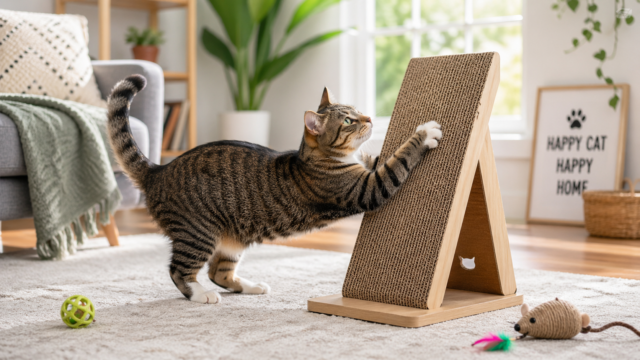
Scratching is not bad behavior. It is normal cat behavior. Cats scratch to stretch, mark territory, shed old claw layers, relieve stress, and maintain healthy paws.
The mistake many people make is trying to stop scratching completely. That will not work. The goal is to redirect scratching to better surfaces.
Cats need scratching posts, pads, cat trees, and surfaces that match their preference. Some cats like vertical posts. Some prefer horizontal cardboard scratchers. Some like sisal. Some like carpet. If your cat ignores one scratcher, try a different texture or angle.
Place scratchers near the furniture they already target. That matters. A scratcher hidden in a corner will not help if your cat loves the arm of the couch in the living room.
Never declaw a cat for furniture protection. Declawing is not a simple nail trim. It removes part of the toe and can cause long term pain and behavior problems. It is an extreme response to a natural behavior.
A better solution is nail trimming, scratcher placement, furniture protectors, cat safe deterrents, and rewarding the cat when they use the correct surface.
Why Cats Sleep on You
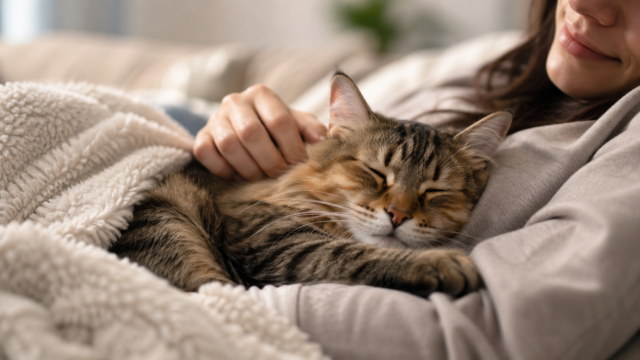
When your cat sleeps on you, beside you, or near your head, it usually means trust. Sleep makes cats vulnerable. If your cat chooses you as a resting place, they feel safe with you.
Cats also like warmth. Your lap, chest, legs, and pillow are warm and comfortable. Your scent and breathing may also be soothing.
Some cats sleep on their humans because they want closeness. Others do it because you are the best heated bed in the house. Either way, it is usually a compliment.
If your cat used to sleep with you and suddenly stops, it may mean they found a new favorite spot, the room temperature changed, another pet disrupted the routine, or they are not feeling well. Look for other changes before worrying.
For pet parents who have lost a beloved cat, bedtime habits can become some of the memories they miss most. That quiet weight beside you, the soft purr, the little routine before sleep. Those are exactly the kinds of details that make a memorial piece feel personal instead of generic.
Why Cats Follow You to the Bathroom
Cats follow people to the bathroom for several reasons. They may be curious. They may dislike closed doors. They may want attention when you are sitting still. They may also see the bathroom as part of their routine.
Cats are territorial animals. A closed bathroom door blocks access to part of their territory. Some cats find that unacceptable.
Also, bathrooms are full of interesting smells, running water, towels, rugs, and small spaces. To a cat, it is not boring.
If your cat follows you everywhere, including the bathroom, it can be affection, habit, curiosity, or mild separation anxiety. If your cat panics when separated from you, cries constantly, refuses food when you leave, or becomes destructive, that may need a more structured behavior plan.
For most cats, though, bathroom supervision is just part of the job they assigned themselves.
Why Cats Show Their Belly
A cat showing their belly is often a sign of trust, but it is not always an invitation to touch. This is where many humans get tricked.
The belly is a vulnerable area. When a cat rolls over and exposes it, they may feel safe. But if you immediately rub their stomach, they may grab your hand with claws and teeth. That does not mean they betrayed you. It means you misread the message.
Some cats love belly rubs. Many do not. Watch your cat’s body language. If they are loose, relaxed, and leaning into touch, they may enjoy it. If the tail starts twitching, ears rotate back, body stiffens, or paws grab your hand, stop.
Respecting your cat’s boundaries builds trust faster than forcing affection.
Why Cats Lick You
Cat licking can mean affection, grooming, bonding, taste, anxiety, or habit. Cats groom members of their social group, so gentle licking can be a sign that your cat accepts you.
Sometimes cats lick because your skin tastes salty, especially after exercise. Some lick lotion, hair products, or fabric, which can be unsafe depending on the substance.
Excessive licking can also be stress related. If your cat licks you obsessively, overgrooms themselves, or chews fur away, look for anxiety, skin irritation, fleas, allergies, pain, or environmental stress.
Normal licking is sweet. Compulsive licking needs attention.
Why Cats Sit in Boxes
Cats love boxes because boxes feel safe. A box gives them walls, cover, warmth, and a place to observe without feeling exposed. It satisfies both predator and prey instincts.
A cat in a box can hide, rest, stalk, and feel protected. That is why your cat may ignore the expensive bed and choose the shipping box instead.
This is not a failure of your shopping choices. It is cat logic.
Boxes can be excellent enrichment, as long as they are safe. Remove staples, tape pieces, sharp edges, plastic packing materials, and anything your cat might chew or swallow.
When Cat Behavior Means Something Is Wrong
Most cat behavior has a normal explanation, but some changes should not be brushed off. Cats hide pain well, so behavior shifts matter.
Call your veterinarian if your cat suddenly stops eating, hides constantly, strains in the litter box, cries while urinating, breathes strangely, becomes aggressive out of nowhere, loses weight, drinks much more water, vomits repeatedly, or seems weak.
Male cats straining to urinate can be an emergency. Do not wait on that.
Behavior is communication. Sometimes it says, “I am happy.” Sometimes it says, “I am bored.” Sometimes it says, “Something is wrong.”
A good pet parent learns the difference.
FAQ About Cat Behavior Explained
Why does my cat bite me gently?
Gentle biting can be play, affection, overstimulation, or a request for space. If your cat bites during petting, they may be telling you they have had enough. Stop petting before the bite happens by watching for tail twitching, skin rippling, ear movement, or sudden body tension.
Why does my cat sleep all day?
Cats naturally sleep a lot, often 12 to 16 hours per day, and some sleep even more. Kittens and senior cats may need extra rest. However, if your cat is suddenly sleeping much more than usual, hiding, not eating, or acting weak, contact your veterinarian.
Why does my cat follow me everywhere?
Your cat may follow you because they love your company, want food, enjoy routine, or feel safer near you. If the behavior comes with distress when you leave, constant crying, or destructive behavior, it may point to separation anxiety.
Why does my cat chirp at birds?
Chirping or chattering at birds is usually linked to hunting excitement and frustration. Your cat sees prey but cannot reach it. A window perch and regular interactive play can help satisfy that instinct safely.
Why does my cat suddenly act scared of me?
A sudden fear response can happen because of a loud noise, unfamiliar scent, accidental pain, a change in the home, or a negative association. Move slowly, speak calmly, and give your cat space. If the fear continues or comes with other behavior changes, check with your veterinarian.
High Value Summary
- Cat behavior is communication, not random weirdness.
- Purring, kneading, rubbing, and slow blinking usually show comfort, but context matters.
- Scratching, zoomies, hiding, and knocking things over are normal behaviors that need better outlets, not punishment.
- Sudden behavior changes can be early warning signs of stress, pain, or illness.
- Personalized cat gifts, memorial keepsakes, and pet themed products connect best when they honor real emotional moments pet parents recognize.
Conclusion: Cat Behavior Explained for Better Bonding
When you understand cat behavior explained in a practical way, your cat becomes much easier to read. The staring, kneading, purring, scratching, hiding, zooming, licking, and bathroom supervising all start to make more sense.
Your cat is not trying to be difficult. They are communicating in the language they know. The more you understand that language, the better your bond becomes.
Celebrate the funny habits. Pay attention to the serious changes. Create routines that help your cat feel safe, loved, and mentally stimulated. And when a cat has left pawprints on your heart, honor those memories in a way that feels personal and meaningful.
👉 Shop here: https://www.etsy.com/shop/LoveFurryBabies
💌 Monthly newsletter launches the 1st with tips, fun facts and announcements:
https://preview.mailerlite.io/forms/2009060/175253019353416926/share
