

 Pets “talk” all day long, just not in words. They communicate with their whole body: ears, eyes, tail, posture, even the tiny muscles around the mouth. When you learn to read those signals, you can prevent bites and scratches, reduce anxiety, improve training results, and build a deeper bond that feels almost like mind reading.
This Love Furry Babies guide will help you decode common dog body language and cat body language so you can understand what your pet is feeling and respond in a way that helps them feel safe, heard, and loved.
Why pet body language matters (more than you think)
A lot of “bad behavior” is actually misunderstood communication.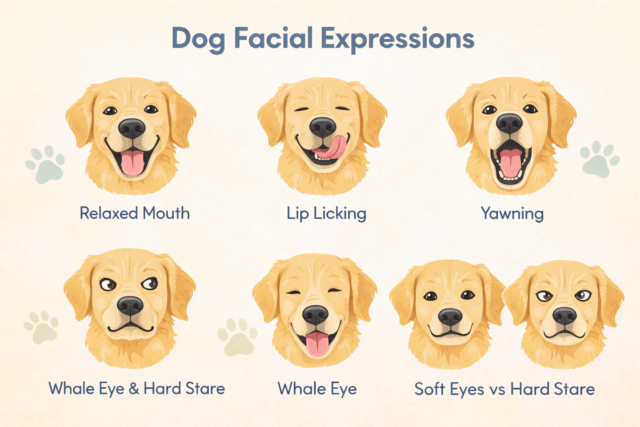
- The dog who “snaps out of nowhere” often gave subtle warning signs first: a stiff body, whale eye, lip lick, head turn, or freezing. These are common stress signals.
- The cat who “hates being held” may be politely asking for space with a twitching tail, flattened ears, tense shoulders, or a quick look away.
When you can spot early signals, you can change the situation before your pet feels they have to escalate.
The golden rule: look at the whole picture, not one signal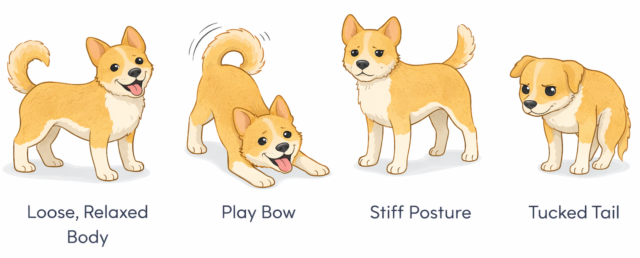
One tail wag does not equal happiness. One purr does not always equal contentment. Body language is like a sentence, not a single word.
Use this quick 3 step check:
- Context: What is happening around your pet (new person, loud noise, food nearby, vet visit)?
- Cluster of signals: Are there multiple cues pointing to the same emotion?
- Change over time: Are signals getting more relaxed, or more tense?
Now let’s decode the most common cues for dogs and cats.
Dog body language basics: what dogs say with eyes, ears, tail, and posture
1) The face: soft or tight tells you everything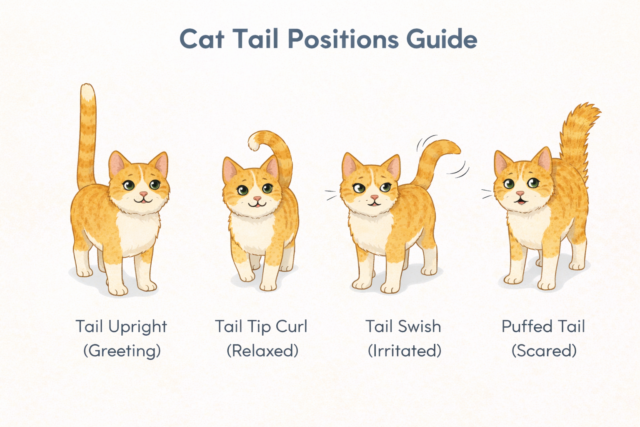
A relaxed dog often looks “squishy” or loose:
- Soft eyes, normal blinking
- Mouth slightly open, relaxed lips
- Loose jaw, relaxed cheeks
A stressed dog may show:
- Tight mouth (closed, lips pressed, corners pulled back)
- Lip licking when there is no food around
- Yawning when not tired
These can be early signs of stress.
Friendly tip: If you see lip licking or yawning during greetings, slow things down. Turn your body sideways, soften your voice, and give your dog space.
2) Whale eye: the “I’m uncomfortable” look
“Whale eye” is when a dog turns the head away but keeps the eyes on the situation, showing the whites of the eyes. It is commonly listed as a stress signal.
You might see it when:
- A child hugs the dog tightly
- Someone reaches over the dog’s head
- Another dog is too close to a toy or food
What to do: Pause contact. Create space. Offer your dog an exit route. This is your dog politely asking for help.
3) Ears: forward, neutral, or pinned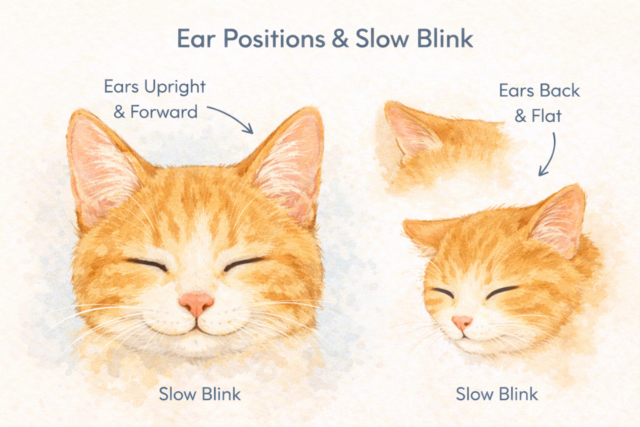
Ear position varies by breed, but the direction and tension still matter.
- Neutral ears: calm, comfortable
- Ears forward: alert, interested, assessing
- Ears pinned back: worried, appeasing, or fearful (especially when paired with a tense body)
4) Tail language: wagging is not always “happy”
Tail movement is about arousal, which can mean excitement, joy, frustration, or worry.
Common patterns:
- Loose, wide wag + wiggly hips: friendly, social
- High tail + tight fast wag: intense arousal, could be overstimulation
- Low tail or tucked tail: fear or uncertainty
- Tail held stiff: tension, potentially defensive

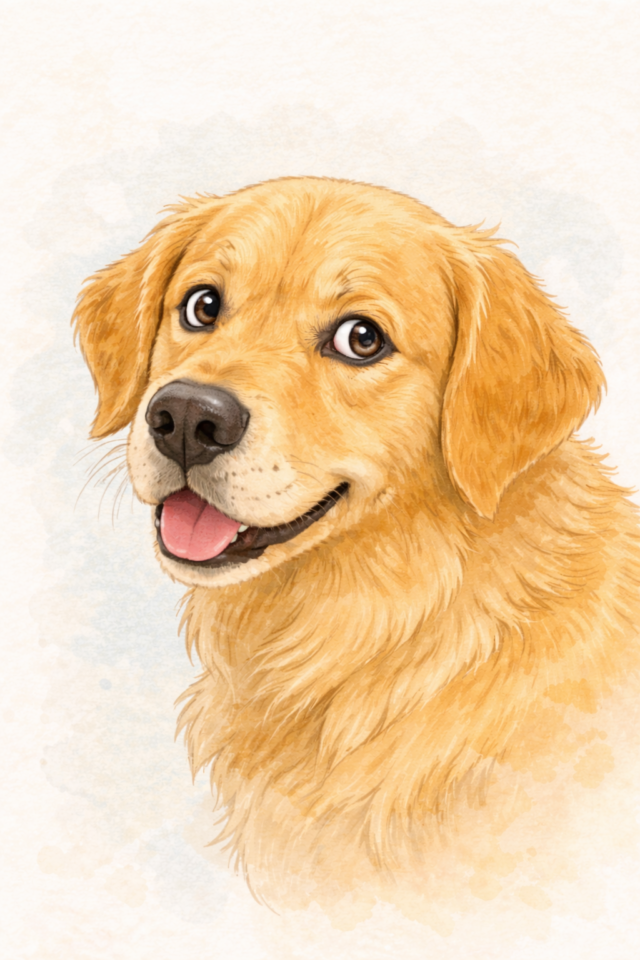
If the rest of the body is stiff and the dog is staring, do not assume “tail wag = safe.” Look for a loose body, soft eyes, and relaxed mouth too.
5) Posture: loose vs stiff
- Loose body, weight centered: comfortable
- Leaning forward with stiff legs: intense interest or challenge
- Crouched low: fear, uncertainty
- Freezing: a major warning sign that a dog is overwhelmed
Freezing is often missed because it looks “calm,” but it can be a last pause before a growl or snap. If your dog freezes, treat it as a request for space.
6) Play signals: the famous play bow
A play bow (front end down, back end up) is dog language for: “Everything that comes next is play!” It is often paired with bouncy movement and a loose body.
Quick play safety check: Healthy play has pauses, role swapping, and loose bodies. If one dog is stiff, cornering, or not taking breaks, interrupt gently and reset.
Cat body language basics: subtle signals that speak volumes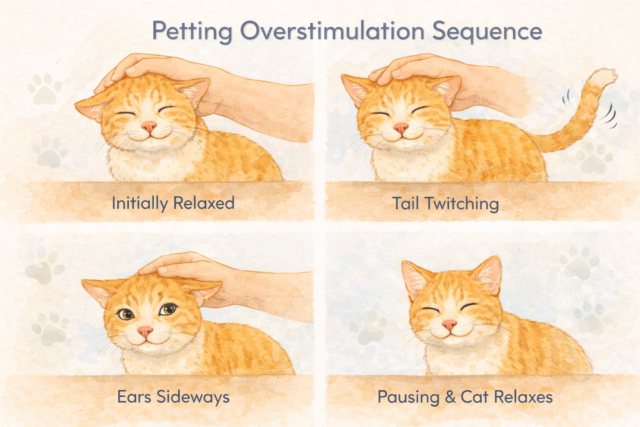
Cats can be wonderfully expressive, but they are often more subtle than dogs. You will notice the biggest clues in the tail, ears, eyes, and overall tension.
1) The tail: a mood meter on a stick
- Tail upright like a flag: confident greeting, friendly
- Tail tip gently curled: relaxed, curious
- Tail swishing or thumping: irritation or overstimulation
- Puffed tail: fear, high arousal, “I’m scared or startled”
- Tail tucked close: insecurity, discomfort
If your cat’s tail starts swishing during petting, that is often a polite “please stop” before a swat.
2) Ears: radar dishes for emotions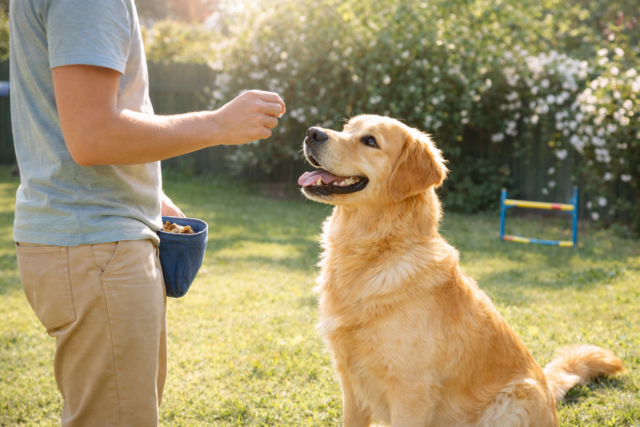
Ears can rotate quickly. Watch for:
- Ears forward: curious, engaged
- Ears sideways (“airplane ears”): uncertain, annoyed
- Ears flattened back: fear, anger, defensive mode
Cat ear position is frequently used as a key signal in feline communication guidance.
3) Eyes: slow blink language and pupil changes
- Slow blinking: trust and comfort, a friendly signal many cat behavior resources describe as affection and reassurance.
Try slow blinking back. It is one of the sweetest ways to “speak cat.” - Dilated pupils: can be excitement, play, fear, or stress. Use context.
- Hard stare: tension, warning, or predatory focus
- Looking away: can be polite and calming, not “ignoring you”
4) Body posture: loaf, crouch, or stretched out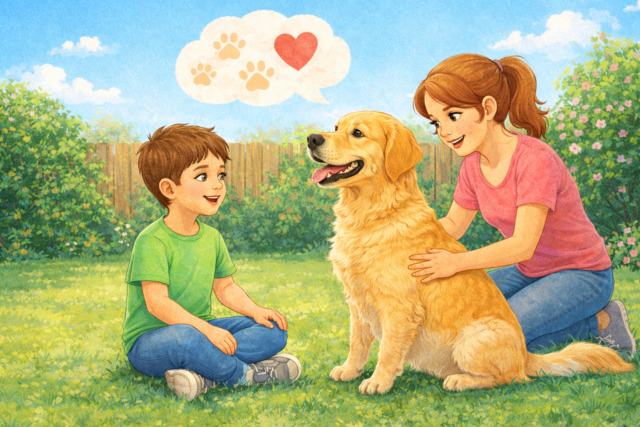
- Stretched out belly exposed: can mean relaxed, but it does not always mean “please rub my belly.” Some cats show the belly as trust, not an invitation for touch.
- Crouched low with tight muscles: fear or readiness to bolt
- Arched back: fear or defensive display
- Loaf position with relaxed whiskers: calm and content
5) Purring, kneading, and grooming: context matters
- Purring: often contentment, but some cats purr when stressed to self soothe.
- Kneading: usually comfort and relaxation, often linked to kittenhood behavior.
- Sudden grooming during tension: can be a displacement behavior, basically “I’m not sure what to do with my feelings right now.”
Common “misread” moments and what your pet might actually mean
“My dog hates the mailman”
Your dog may be:
- Startled by the sound
- Protecting territory
- Experiencing frustration because they cannot reach the trigger
Try pairing mail sounds with treats at a distance, then gradually reduce the distance as your dog stays relaxed. If your dog shows repeated stress signals like lip licking, yawning, whale eye, or freezing, slow the training down.
“My cat bites after a few minutes of petting”
Many cats experience petting induced overstimulation. Early signs often include:
- Tail twitching
- Skin rippling
- Ears turning sideways
- Sudden head turn toward your hand
Solution: Pet for shorter bursts, focus on cheeks and chin, and pause often. Let your cat re initiate.
“My dog is guilty”
The “guilty look” is usually appeasement and stress in response to your tone and body language, not a confession. Many dogs show lowered posture, averted gaze, and licking when they sense displeasure.
How understanding body language improves training, trust, and everyday life
When you start responding to what your pet is truly communicating, you will notice changes fast:
- Fewer tense moments during grooming, nail trims, or harness time
- Easier introductions to visitors
- Better walks because you spot stress early
- Stronger recall and focus because your pet feels safer
- Deeper emotional connection because your pet learns: “My human listens”
And there is a bigger, softer gift too. The more you tune in, the more pets shape who we become.
Here are 5 beautiful reminders of what pets teach us along the way:
- Pets help us develop patience through training, routines, and daily care.
- Animals strengthen our empathy by teaching us to read nonverbal cues and understand different personalities.
- Everyday kindness grows naturally when we nurture and care for our furry companions.
- Emotional wellness improves through unconditional love, physical touch, and comforting routines with pets.
- Pets inspire us to slow down, enjoy small moments, and appreciate simple joys in daily life.
A quick “pet body language” cheat sheet you can screenshot
Dogs: relaxed and happy
- Loose body, weight balanced
- Soft eyes and normal blinking
- Gentle wag with relaxed hips
- Mouth relaxed
Dogs: stressed or unsure
- Lip licking or yawning when not tired
- Whale eye
- Stiff posture or freezing
- Turning head away while monitoring
Cats: relaxed and comfortable
- Slow blink
- Tail up, gentle movements
- Ears forward or neutral
- Body loose, calm loaf or stretch
Cats: overstimulated or annoyed
- Tail swish or thump
- Ears sideways or pinned
- Skin twitching, sudden grooming
- Quick head turns toward your hand
Final thoughts: become fluent in “pet”
You do not need to memorize every signal. Just practice noticing patterns. Start with one daily habit: before you pet, pick up, or approach your furry friend, take a 3 second look at their eyes, ears, tail, and overall tension. That tiny pause can prevent misunderstandings and create a home that feels calmer for everyone.
If you want more pet tips, sweet keepsakes, and cozy inspiration, keep exploring the Love Furry Babies blog and share this post with a fellow pet parent who loves learning about their fur baby.
