
Labor Day weekend is a chance to relax, spend time with family and friends, enjoy one more cookout, take a day trip, or simply slow down before summer comes to an end. But while people are thinking about food, travel, pools, parties, and plans, pets are often dealing with a very different experience.
Good Labor Day pet safety starts with looking at the holiday from your dog or cat’s point of view. A house full of visitors, an open gate, unfamiliar food, hot pavement, loud sounds, long periods alone, or a change in routine can turn an ordinary holiday into a stressful or dangerous situation.
The good news is that most holiday pet emergencies are preventable. A few simple precautions can help your furry family members stay safe while you enjoy the day.
Why Labor Day Pet Safety Deserves Extra Attention
Labor Day often changes the normal rhythm of a household.
You might leave home earlier than expected, stay at a friend’s house longer than planned, invite people over, attend a neighborhood gathering, spend time around a pool, or decide at the last minute to go out for dinner.
Your pet does not understand why the routine suddenly changed.
Dogs that normally go outside at predictable times may need a bathroom break while you are away. Cats may become nervous when strangers enter their space. Pets that are normally calm can become anxious when doors are opening constantly or children are running through the house.
This is why holiday pet care should be planned before the celebration begins, not after something goes wrong.
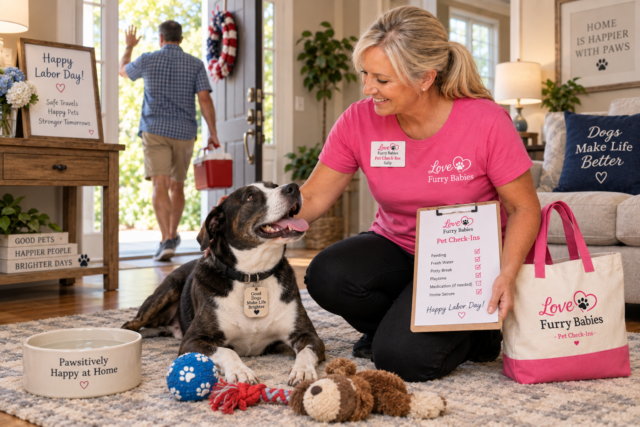
If your Labor Day plans will keep you away from home longer than usual, consider arranging help before you leave. Love Furry Babies Pet Check-Ins can provide another layer of support when you cannot get home when expected.
Learn more about Love Furry Babies Pet Check-Ins.
Protect Pets Around Labor Day Cookouts
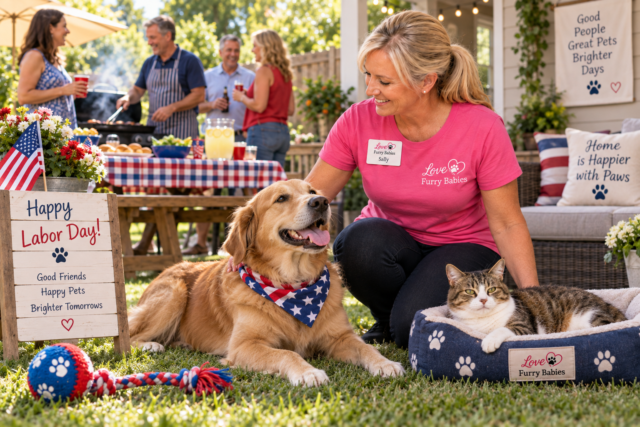
Backyard cookouts may be fun for people, but they create several hazards for dogs and cats.
The biggest problem is often food.
A pet standing beside the grill may look adorable while waiting for someone to drop a hamburger, but many foods served at gatherings are unhealthy or potentially dangerous for pets.
Chocolate, grapes, raisins, onions, garlic, alcohol, and foods or sweets containing xylitol should be kept completely away from pets. Fatty foods can cause stomach problems and may contribute to pancreatitis in some animals.
Bones, corn cobs, skewers, foil, plastic wrap, and food packaging can also become dangerous if swallowed.
Guests may not know your pet’s dietary restrictions. Children may be especially tempted to share food with an eager dog.
Instead of assuming everyone knows the rules, tell guests that your pet should not receive table food.
Garbage also needs attention. A trash bag containing bones, grease, wrappers, or leftover food may smell irresistible to a dog. Keep garbage containers securely closed and preferably somewhere pets cannot access them.
The grill itself creates another risk. Hot surfaces, grease, charcoal, utensils, and dropped food can cause burns or other injuries. Create enough distance between pets and the cooking area that they cannot accidentally bump into a hot grill or grab something dangerous.
Keep Dogs and Cats Safe in the Heat
Labor Day may signal the unofficial end of summer, but hot weather can still be very real.
Pet heat safety should remain a priority, particularly during outdoor gatherings.
Dogs can overheat much faster than many people realize. Older dogs, puppies, overweight pets, flat-faced breeds, and pets with certain medical conditions may be especially vulnerable.
Make sure pets have access to fresh water and shade whenever they are outside. Give them opportunities to return indoors to a cool environment instead of expecting them to remain outside throughout the celebration.
Pavement, concrete, decks, and other outdoor surfaces can also become extremely hot.
If the ground feels uncomfortably hot to your hand, it may be too hot for your dog’s paws.
Never leave a pet alone inside a parked vehicle, even if you believe you will only be gone for a short period of time. Vehicle temperatures can rise rapidly.
Watch for unusual or excessive panting, weakness, confusion, drooling, vomiting, or difficulty walking. A pet showing signs of serious overheating needs prompt veterinary attention.
Prevent Escapes When Guests Are Coming and Going
One of the easiest holiday dangers to overlook is an open door.
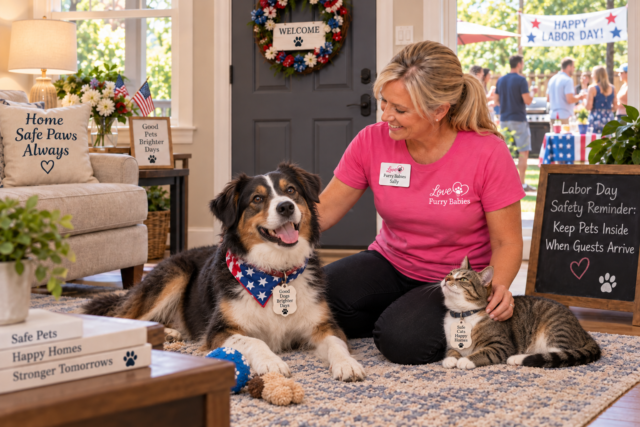
Your dog may normally wait politely when you walk outside. That does not mean the same thing will happen when several guests arrive at once, children run through the doorway, or someone leaves the backyard gate partially open.
Cats can also slip through an unfamiliar opening quickly and quietly.
Before guests arrive, decide where your pet will be safest.
Some pets enjoy being part of the gathering. Others would rather spend the afternoon in a quiet bedroom, office, or comfortable area away from the activity.
Check gates, fences, doors, screens, and latches before the gathering begins.
Your pet should also have current identification. Make sure collar tags are readable and verify that microchip contact information is current.
A few minutes of preparation can prevent hours or days of searching for a frightened missing pet.
Create a Quiet Space for Anxious Pets
Not every pet wants to attend your Labor Day party.
Some dogs and cats find crowds stressful. Others become nervous around unfamiliar voices, children, music, doorbells, or sudden noises.
Trying to force a frightened pet to socialize usually does not improve the situation.
Create a comfortable retreat where your pet can rest without being disturbed. Include familiar bedding, water, favorite toys, and anything else that normally helps your pet settle.
If your dog or cat already struggles with anxiety, planning ahead is especially important.
You can also read How to Calm an Anxious Pet Naturally at Home for additional gentle ideas that may help your pet feel more secure.
Never give your pet human medication or a new calming product without making sure it is appropriate for your animal. When anxiety is severe, talk with your veterinarian about safe options before the holiday.
Fireworks and Loud Holiday Noise
Labor Day celebrations do not always include fireworks, but some communities and individual households may use them.
Even distant fireworks can be frightening to sensitive pets.
Fireworks anxiety in pets can cause pacing, trembling, hiding, barking, destructive behavior, or attempts to escape.
Bring pets indoors before loud activity begins. Close windows and doors, and consider using a television, fan, or familiar background sound to reduce sudden outside noise.
Do not take a frightened dog outside simply to watch fireworks with the family. What feels festive to you may feel terrifying to your pet.
Make sure your pet cannot escape through a door or gate if startled.
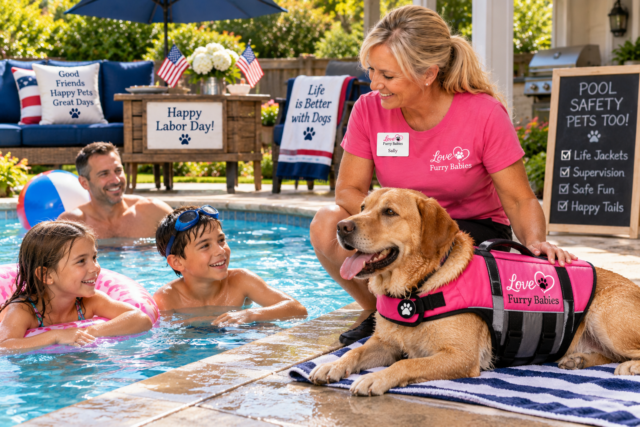
Practice Pool and Water Safety
If your Labor Day celebration includes a swimming pool, lake, or boat, do not assume every dog is automatically a strong swimmer.
Some dogs love water. Others panic.
Even dogs that swim well can become tired, disoriented, or struggle to find a way out of a pool.
Supervise pets around water and make sure they know where the pool steps or exit are located.
Keep pets away from pool chemicals and discourage them from drinking large quantities of pool water.
If you are boating with your dog, a properly fitted canine life jacket adds an important layer of protection.
Cats should generally have a secure indoor space away from busy pool areas, open gates, and unfamiliar people.
Labor Day Pet Safety When You Leave Home
Sometimes the biggest Labor Day pet safety concern happens because you are not home at all.
You may plan to be gone for two hours and end up being away for six.
Dinner turns into an evening with friends. A quick visit becomes an all-day family gathering. Traffic slows you down. Your plans change unexpectedly.
Meanwhile, your dog may still be waiting for a bathroom break, food, medication, fresh water, or simply someone to make sure everything is okay.
This is exactly why having a backup pet care plan matters.
Love Furry Babies Pet Check-Ins are designed for situations when you need someone to check on your furry family member while you are away. Scheduled, recurring, backup, same-day, and emergency situations can all happen in real life.
For scheduled or recurring care, visit the Pet Check-In Form.
Planning ahead gives you more freedom to enjoy your holiday because you are not constantly wondering what is happening at home.
Watch What Guests Bring Into Your Home
Your own home may normally be pet-safe, but visitors can introduce hazards without realizing it.
A guest may leave medication inside an open purse on the floor. Someone may bring chocolate candy, gum containing xylitol, alcohol, or foods your pet should not eat.
Children may leave small toys where a curious dog can swallow them.
Visitors may also leave bags, coolers, or food containers within reach.
You do not need to make guests nervous about interacting with your pet. Simply pay closer attention to anything new entering your pet’s environment.
If your animal is particularly curious or known for stealing food, keeping them in a separate comfortable area during meal preparation and eating may be safer for everyone.
Do Not Forget Your Pet’s Normal Routine
Celebrations may change your schedule, but pets still benefit from predictability.
Try to keep feeding, bathroom breaks, walks, medication, and bedtime reasonably close to normal.
Dogs may become restless when their usual walk suddenly disappears from the day. Cats can become stressed when meals arrive hours later than expected.
Maintaining familiar routines can also help reduce holiday anxiety.
If you know your schedule will be unpredictable, arranging a Pet Check-In can prevent your changing plans from becoming your pet’s problem.
Prepare Before an Emergency Happens
Every pet household should know where to go if an emergency happens.
Keep your regular veterinarian’s information accessible and know the location of the nearest emergency veterinary clinic.
If your pet eats something potentially toxic, do not automatically wait for symptoms to appear. Some toxins require immediate professional guidance.
Know your pet’s medications, medical history, veterinarian, feeding instructions, and emergency contacts.
If someone else may care for your pet, make sure that person has the information needed to respond appropriately.
Preparation matters because emergencies rarely happen at convenient times.
Make Labor Day Fun for Your Pet Too
Keeping pets safe does not mean excluding them from the holiday.
A calm walk earlier in the day, some supervised backyard time, a favorite toy, a pet-safe treat, or a relaxing afternoon beside you can make Labor Day enjoyable for your furry family member too.
Families looking for a quieter indoor activity can also visit the Love Furry Babies Etsy shop for pet-themed coloring pages and other creative products.
Custom pet portraits can also turn a favorite photograph into a meaningful keepsake or gift.
And for families whose holiday gatherings bring back memories of a beloved pet who is no longer physically with them, Paws Beyond the Rainbow offers a special way to celebrate and remember that bond.
Labor Day Pet Safety FAQ
Can my dog eat hamburger or hot dog meat at a Labor Day cookout?
A small amount of plain, fully cooked, unseasoned meat may be tolerated by many healthy dogs, but heavily seasoned, greasy, salty, or fatty cookout food is not a good choice. Avoid onions, garlic, sauces, bones, and other ingredients that could be harmful. If your pet has dietary restrictions or health conditions, follow your veterinarian’s recommendations.
Should I leave my dog outside during a Labor Day party?
That depends on the weather, your dog’s temperament, your yard, and the amount of supervision available. A secure, climate-controlled indoor space is often safer during crowded gatherings, particularly if gates and doors will be opening frequently.
What should I do if fireworks frighten my pet?
Bring your pet indoors, secure windows and doors, provide a quiet familiar space, and use normal background sound to reduce sudden noise. If your pet experiences severe fireworks anxiety, discuss safe treatment options with your veterinarian.
What if I unexpectedly cannot get home to my pet?
Have a backup caregiver or Pet Check-In plan established before you need it. Someone should be able to provide fresh water, food if needed, bathroom access, medication when appropriate, and confirmation that your pet is safe.
What information should a pet caregiver have?
Provide feeding instructions, medications, veterinary information, emergency contacts, safe access instructions, your pet’s normal routine, and any behavioral or medical concerns the caregiver needs to know.
Enjoy the Holiday Without Forgetting Your Furry Family
Labor Day should be a day you remember for good food, laughter, family, friends, and time together, not because your pet escaped through an open gate, ate something dangerous, became overheated, or spent hours waiting for you to come home.
The most effective Labor Day pet safety plan is simple: think ahead.
Look at your plans from your pet’s perspective. Protect them from unsafe foods, heat, open doors, crowded spaces, water hazards, loud noises, and unexpected changes in your schedule.
If your plans may keep you away longer than expected, arrange a backup before you need one.
Your pet depends on you every day, including holidays. A little preparation means you can enjoy Labor Day with greater peace of mind knowing your furry baby is safe, comfortable, and cared for.
👉 Shop here: https://www.etsy.com/shop/LoveFurryBabies
💌 Monthly newsletter launches the 1st with tips, fun facts and announcements:
https://preview.mailerlite.io/forms/2009060/175253019353416926/share
