

 Most pet parents love their furry babies deeply, but love is not measured only by birthdays, special treats, expensive toys, or big adventures. What shapes a pet’s quality of life most often happens during ordinary days.
The best daily habits that improve your pet’s life are usually simple, repeatable, and affordable. Fresh water, appropriate meals, movement, mental stimulation, a comfortable place to rest, positive attention, and a few minutes of genuine connection can make everyday life richer.
The goal is not to create a perfect schedule. It is to build a realistic daily pet care routine around the animal you actually have. A young energetic dog may need active play and problem solving. A shy indoor cat may value climbing space, hiding places, and short interactive games. A senior pet may need gentle movement, easier access to essentials, and a calmer routine.
Small habits become powerful when they are repeated with care.
Daily Habits That Improve Your Pet’s Life Begin With Predictability
Pets notice patterns. They learn when you wake up, when meals usually happen, when the leash appears, when the home becomes quiet, and when bedtime begins.
A consistent routine can make the day easier for your furry baby to understand. That does not mean everything must happen at the exact same minute. Real life changes. The better goal is a recognizable rhythm.
Morning bathroom break. Breakfast. Rest. Activity. Connection. Evening meal. Quiet time. Bedtime.
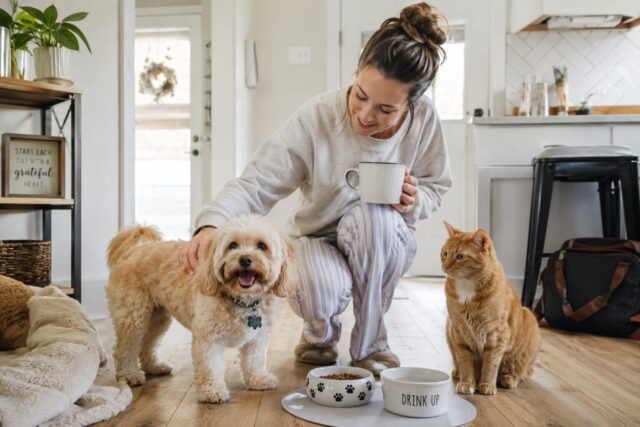
When work schedules, visitors, travel, storms, or family events disrupt the day, try to preserve familiar anchors. The same bed, feeding place, favorite blanket, evening ritual, or trusted person can help maintain continuity.
Predictability is not boring when you are a pet. Familiarity can be comforting.
Habit 1: Start the Day With a Calm Pet Check In
Before becoming absorbed in your phone, work, or chores, spend a brief moment observing your pet.
Look at posture, movement, appetite, energy, breathing, and behavior. Does your dog get up normally? Is your cat moving comfortably? Is your pet unusually withdrawn, restless, clingy, or reluctant to eat?
You know your furry baby’s normal patterns better than most people. A subtle change may stand out to you before anyone else notices it.
Then add connection. Use a cheerful greeting, gentle touch if your pet enjoys it, or a quiet moment together. Some pets love cuddling. Others prefer to sit nearby without being handled.
Respecting those preferences matters. Affection should feel good to the pet receiving it, not only to the person giving it.
Habit 2: Make Fresh Water and Consistent Meals Nonnegotiable
A strong pet wellness routine starts with basics that are easy to overlook.
Refresh water regularly. Keep bowls clean. Pay attention to meaningful changes in drinking. Feed an appropriate diet and portion based on your pet’s species, age, size, activity, health needs, and veterinary guidance.
Consistency is usually more useful than constantly changing foods or adding random extras. Treats can be wonderful for training and bonding, but they should fit into the overall routine rather than quietly becoming a large part of daily intake.
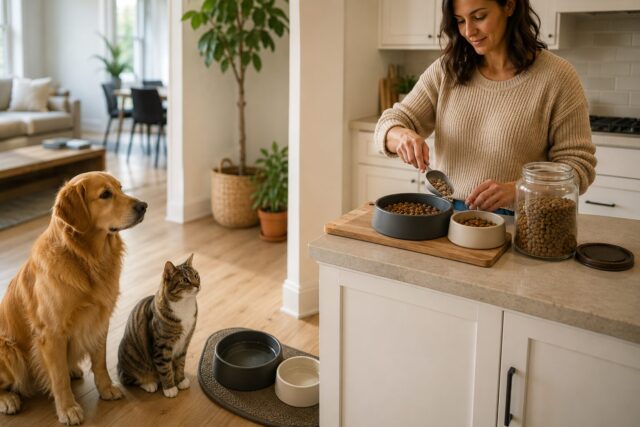
Mealtime can also support mental stimulation for pets. Depending on the animal, part of a measured meal may work in a safe puzzle feeder or supervised search activity. The goal is engagement, not frustration.
In a multi pet home, make sure feeding arrangements prevent bullying, guarding, or one pet stealing another pet’s food.
For more information, read Love Furry Babies:
Guidelines for Healthy Meals for Dogs, Cats, and Other Pets
https://lovefurrybabies.com/2025/08/21/guidelines-for-healthy-meals-for-dogs-cats-and-other-pets/
Habit 3: Build Daily Movement Around the Pet You Actually Have
One of the most important healthy pet habits is regular movement, but generic exercise rules are not good enough.
A young working breed, a tiny companion dog, an indoor cat, and a senior pet with mobility problems should not be pushed into identical routines.
For dogs, activity may include walks, sniffing time, fetch, tug, safe swimming, or short backyard games. For cats, movement may include wand toys, climbing, chasing, stalking games, and brief bursts of interactive play.
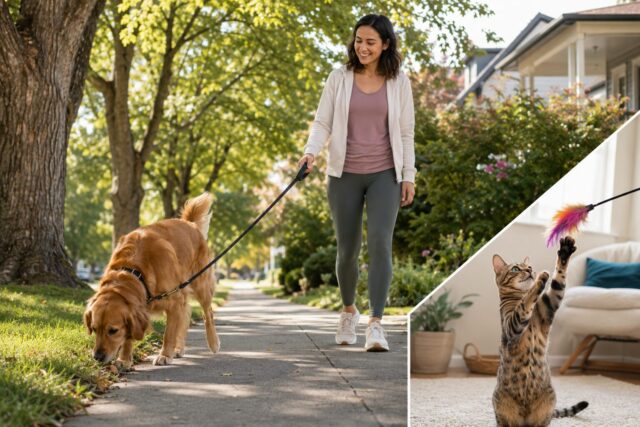
Quality matters. A dog walk does not always need to become a race for distance. Safe opportunities to sniff and explore can make an outing more engaging. A cat does not necessarily need a long play session. Several focused minutes with a toy the cat genuinely wants to chase may be far more effective than leaving ignored toys on the floor.
Adjust activity for age, weather, heat, mobility, medical conditions, and individual ability. More exercise is not automatically better.
For additional ideas, visit:
Guidelines for Activity and Exercise for Pets
https://lovefurrybabies.com/2025/08/23/guidelines-for-activity-and-exercise-for-pets/
Habit 4: Give Your Pet’s Brain Something to Do Every Day
Physical activity is only part of a full life. Mental stimulation for pets deserves a place in the daily routine too.
Dog enrichment activities can be remarkably simple. Hide a favorite toy, practice a scent search, rotate safe toys, offer an appropriate puzzle, or teach a new skill.
Cat enrichment ideas can include vertical perches, cardboard boxes, window watching, supervised treat searches, scratching opportunities, toy rotation, and interactive play that encourages chasing and stalking.
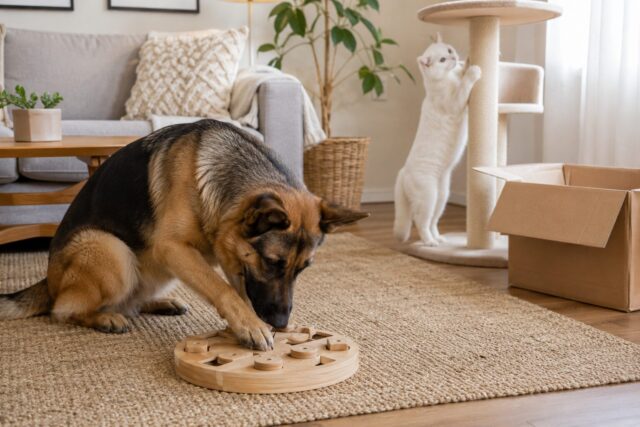
The strongest enrichment strategy is not buying the largest number of products. It is paying attention to what your pet actually enjoys.
A basket filled with untouched toys is not effective enrichment. A five minute activity that fully captures your furry baby’s interest may be much more valuable.
Rotate experiences rather than placing everything out at once. Supervise new activities and remove anything that could be swallowed, tangled around the pet, or destroyed dangerously.
Habit 5: Use Short Positive Training Sessions
Training should not be reserved for puppies or behavior problems. A few minutes of positive, reward based practice can become one of the best pet bonding activities in the home.
Practice useful skills such as coming when called, waiting calmly, touching a hand target, entering a carrier, accepting gentle handling, or settling in a designated place.
Cats can learn too. Many respond well when sessions are brief and the reward genuinely matters to them.
Keep training short enough that your pet remains interested. Stop before frustration takes over. The goal is communication, confidence, and cooperation.
Household consistency also matters. When one person encourages a behavior and another person punishes it, the animal receives a confusing message. Decide what behavior you want, reward it clearly, and make expectations understandable.
For a deeper training resource, explore the Love Furry Babies blog collection:
https://lovefurrybabies.com/furry-babies-blog/
Habit 6: Protect Daily One On One Connection Time
Many pet parents spend hours physically near their animals without giving them much focused attention.
Working on a computer beside your dog is not always the same as interacting with your dog. Watching television while your cat sits across the room is not necessarily meaningful engagement.
Create a small pocket of undistracted time.
Brush your furry baby if grooming is enjoyable. Play a favorite game. Sit outside together safely. Practice a skill. Talk gently. Share quiet contact.
The activity does not need to be elaborate.
This habit becomes especially important in multi pet homes, where the boldest animal may accidentally receive most of the attention. Individual time helps you understand each pet’s personality, preferences, and changes.
Those ordinary expressions are also worth celebrating. A custom pet portrait can preserve the look and personality that make one furry baby unmistakably yours. That is a natural reason to explore personalized pet artwork in the Love Furry Babies Etsy shop.
Habit 7: Create a Home That Allows Real Rest
A happy pet does not need entertainment every minute.
Rest is part of a healthy pet wellness routine. Give your furry baby a place to sleep without constant interruption from children, guests, other animals, or household traffic.
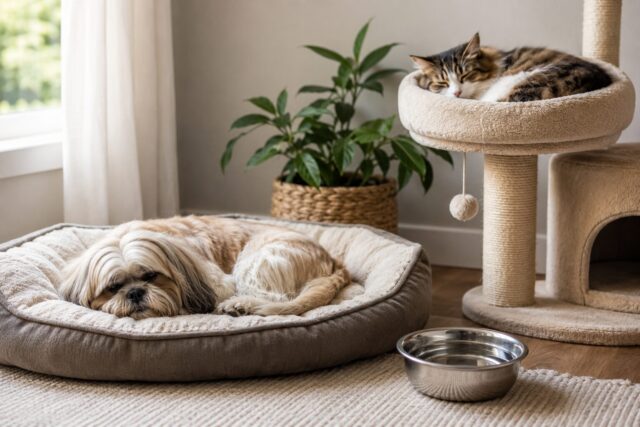
For a dog, that may mean a comfortable bed in a quiet corner or a crate that has been introduced positively. For a cat, it may mean a high perch, covered bed, separate room, or hiding place.
Senior pets may need softer bedding, better traction, shorter distances to water, easier access to bathroom areas, or fewer obstacles.
Look at the home from your pet’s perspective. Slippery floors, blocked litter boxes, constant noise, food competition, repeated handling, or a lack of safe retreat spaces can make daily life harder.
For pets that struggle with nervousness, read:
How to Calm an Anxious Pet Naturally at Home: Gentle Tips for Dogs and Cats
https://lovefurrybabies.com/2026/05/18/how-to-calm-an-anxious-pet-naturally-at-home-gentle-tips-for-dogs-and-cats/
Habit 8: Do a Quick Daily Body and Behavior Check
You do not need to perform a medical examination at home. You do need to stay observant.
During ordinary grooming, affection, feeding, and bathroom routines, notice eyes, ears, skin, coat, paws, mouth, appetite, movement, and behavior.
Watch for changes such as new lumps, tenderness, unusual odors, swelling, limping, repeated scratching, scooting, coughing, vomiting, diarrhea, appetite changes, unusual thirst, or withdrawal.
The goal is not to diagnose a problem yourself. The goal is to recognize when something is different and contact a veterinarian when a change is severe, persistent, concerning, or simply not normal for your pet.
Organization can help. A printable pet care organizer can make it easier to track medications, appointments, symptoms, routines, feeding changes, and questions for the veterinarian. This is one of the strongest Etsy product connections for this topic because it solves a practical problem instead of forcing a sale.
Habit 9: Preserve Ordinary Memories, Not Just Milestones
One day, the ordinary things may become the memories you treasure most.
The way your dog sleeps with one paw stretched forward. The sound of your cat running toward dinner. The ridiculous look after a bath. The favorite chair. The two pink bows. The toy carried from room to room.
Take photos. Write down funny habits. Save favorite stories. Print something instead of leaving every memory buried on a phone.
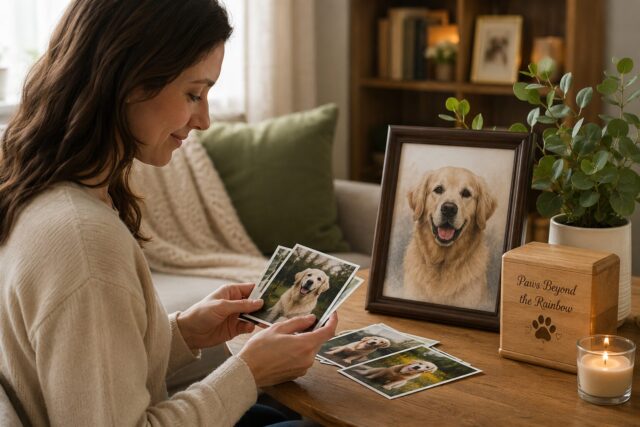
This is where custom pet portraits fit naturally into a life centered on appreciation. A portrait can celebrate a furry baby who is happily beside you today.
For families remembering a beloved pet who has passed, Paws Beyond the Rainbow offers a more specific memorial keepsake created to honor that bond with tenderness.
This should remain a gentle connection, not a hard sell. The emotional truth is enough. We rarely regret preserving meaningful memories of the animals we love.
Habit 10: End the Day With a Calm Reset
A simple evening routine can close the day with familiarity.
Complete the final bathroom break or litter check. Refresh water when needed. Give prescribed medications. Lower household intensity. Offer a familiar resting place.
Then take a quick mental inventory.
Did your pet eat normally? Drink normally? Move comfortably? Use the bathroom? Seem unusually restless, withdrawn, or uncomfortable?
You are not searching for perfection. You are building awareness.
For some pets, the happiest ending is a cuddle. For others, it is a chew, a quiet perch, or sleeping near you without being touched.
Let your pet show you what comfort looks like.
Frequently Asked Questions About Daily Pet Happiness
What is the most important daily habit for a happy pet?
There is no single habit that fits every animal. Consistent attention to basic needs is the foundation. Appropriate food, fresh water, safe activity, rest, enrichment, observation, and positive connection work together.
The best routine is one you can realistically maintain and adapt to your individual pet.
How much daily play does my pet need?
It depends on species, age, breed, health, personality, physical ability, and the type of play.
A short focused session may be valuable for one pet, while another needs several activity periods throughout the day. Watch interest, recovery, mobility, and behavior. Ask your veterinarian for individualized guidance when health or mobility is a concern.
Can indoor pets be truly happy?
Yes, but the environment must meet their needs.
Indoor cats can benefit from climbing opportunities, hiding areas, window views, scratching options, interactive play, and appropriate food based enrichment. Indoor dogs still need suitable movement, training, exploration, rest, and social connection.
Keeping an animal indoors does not eliminate the need for an interesting life.
How do I know whether my pet is bored?
Possible signs may include destructive behavior, restlessness, excessive attention seeking, repetitive behavior, or loss of interest.
However, those signs can also have medical or behavioral causes. Do not automatically assume boredom when a new or concerning behavior appears. Observe carefully and seek professional guidance when appropriate.
Do I need expensive products to improve my pet’s happiness?
No.
Useful products can make routines easier, but spending money is not the same as meeting a pet’s needs. Short training sessions, safe scent games, quiet resting spaces, cardboard boxes for suitable cats, toy rotation, focused attention, and predictable routines can all be meaningful.
Buy products because they solve a real problem, support a good habit, preserve a meaningful memory, or genuinely bring joy. Do not buy because marketing makes you feel guilty.
Conclusion: Small Daily Habits Create a Happier Life
The most effective daily habits that improve your pet’s life are not dramatic. They are quiet actions repeated with care.
Fresh water. Appropriate meals. A sniffing walk. A wand toy. A short training game. A clean resting place. A quick health observation. A few minutes of undistracted attention.
Start with the habit your household is most likely to maintain. Then add another. Do not build an elaborate routine that collapses after three days. Build a realistic one that still works when life becomes busy.
Most importantly, pay attention to the furry baby in front of you. The best pet happiness tips are personal. Learn what makes your dog light up, what helps your cat feel secure, what your senior pet can comfortably enjoy, and what signals that something has changed.
Love Furry Babies is here to celebrate that bond through practical pet care content, custom pet portraits, pet themed digital downloads, printable coloring pages, organizers, and heartfelt Paws Beyond the Rainbow keepsakes.
Make today a little better for your furry baby. Then do it again tomorrow.
That is how a happy life is built.
👉 Shop here: https://www.etsy.com/shop/LoveFurryBabies
💌 Monthly newsletter launches the 1st with tips, fun facts and announcements:
https://preview.mailerlite.io/forms/2009060/175253019353416926/share
