

4th of July Pet Safety and Preparedness: How to Protect Your Dog or Cat from Fireworks, Heat, and Holiday Hazards
The 4th of July can be exciting for people, but for many dogs and cats, it can feel confusing, loud, frightening, and unsafe. That is why 4th of July pet safety and preparedness matters before the first firework ever goes off. A little planning can prevent panic, escapes, stomach trouble, burns, dehydration, and heartbreaking emergencies.
Pets do not understand fireworks as celebration. They hear sudden explosions, smell smoke, see flashing lights, and feel changes in the home. Even a normally calm dog may bolt through a door. Even an indoor cat may hide for hours. Even a friendly pet may become anxious around guests, grills, food, and noise.
The good news is that most holiday pet problems are preventable. You do not need a complicated plan. You need a clear plan. Keep your pet secure, keep dangerous foods away, prepare a calm indoor space, protect them from heat, and know what to do if something goes wrong.
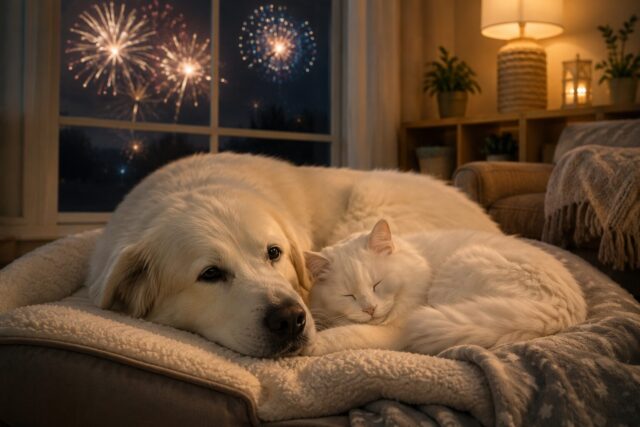
Why 4th of July Pet Safety and Preparedness Should Start Before the Holiday
Waiting until fireworks begin is one of the biggest mistakes pet parents make. By then, your dog or cat may already be scared, pacing, panting, hiding, barking, trembling, or trying to escape. A better approach is to prepare several days in advance.
Start by checking your pet’s collar, ID tag, and microchip information. If your pet gets loose, current identification can make the difference between a fast reunion and a long, painful search. Make sure your phone number is correct and easy to read. If your pet does not wear a collar indoors, the 4th of July is the time to reconsider that habit, at least temporarily.
Next, think about your home. Which room is the quietest? Which room has the fewest windows? Which door is least likely to be opened by guests? That space should become your pet’s comfort zone for the evening. Add bedding, water, favorite toys, a familiar blanket, and something that smells like you.
If your pet already has serious anxiety, do not guess your way through it. Call your veterinarian before the holiday. Some pets need professional help, especially if they have a history of panic, destructive behavior, or escape attempts.
Create a Calm Indoor Safe Space for Dogs and Cats
A safe space is not punishment. It is protection. Your dog or cat should have a peaceful place away from fireworks, guests, children, loud music, open doors, grills, and food tables.
Choose a bedroom, laundry room, bathroom, or quiet den. Close windows and curtains. Turn on a fan, television, white noise machine, or calming music to help soften outside sounds. Make the room feel normal and familiar, not like a sudden lockdown.
For dogs, a crate can help if they already view it as a safe place. Do not force a crate on a dog who finds it stressful. For cats, provide hiding options such as a covered bed, open carrier, soft box, or closet space with the door safely propped.
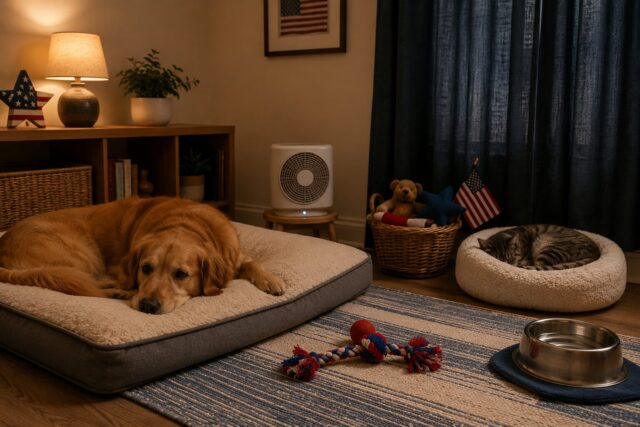
Comfort items can help, but they are not magic. Calming wraps, lick mats, puzzle toys, and long lasting chews may reduce stress for some pets. They work best when introduced before the holiday, not during peak panic. The same is true for calming supplements. Never give your pet human medication, CBD, sedatives, essential oils, or alcohol. When in doubt, ask your veterinarian first.
A smart pet parent does not bring a frightened animal closer to fireworks to “get them used to it.” That is ineffective and can make fear worse. Keep pets indoors where they feel protected.
Fireworks Are Not Fun for Most Pets
Fireworks are the main danger of the holiday. They can trigger panic, escape, injury, and destructive behavior. Dogs may dig under fences, jump gates, chew through screens, or bolt through doors. Cats may hide in dangerous places or slip outside unnoticed.
Do not take pets to fireworks shows. Do not leave them in the yard. Do not assume a fenced yard is enough. A scared animal can do things they would never normally do.
If fireworks are being used at your home, keep pets completely away from the area before, during, and after the display. Fireworks can cause burns, eye injuries, smoke irritation, and poisoning if chewed or swallowed. After fireworks are finished, clean the area carefully before allowing pets outside again.
This is also a good time to remind guests that doors matter. A single open door can undo every other safety step. Place a note on the door if needed. Tell guests clearly that pets must stay inside.
4th of July Pet Safety and Preparedness for Cookouts and Party Food
Holiday food is another major risk. Many pets end up sick because someone “just gave them a little bite.” That little bite can turn into vomiting, diarrhea, pancreatitis, choking, or a poison emergency.
Keep pets away from barbecue plates, trash bags, skewers, bones, desserts, cocktails, and sugar free products. Cookout foods are usually too salty, fatty, seasoned, or dangerous for pets. Onions, garlic, chocolate, grapes, raisins, alcohol, bones, corn cobs, and xylitol sweetener should stay completely out of reach.
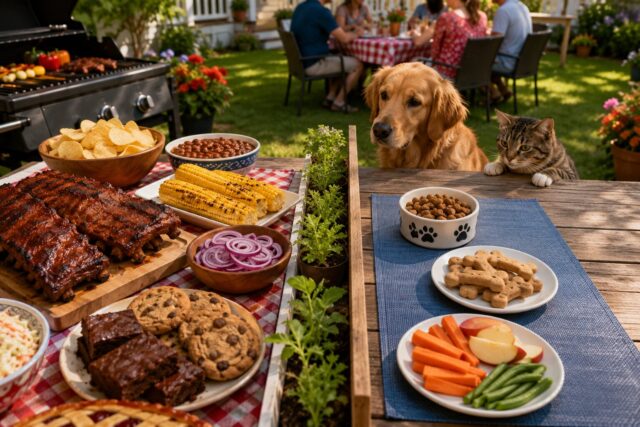
Set pet rules before guests arrive. If guests want to give treats, provide pet safe treats in a labeled container. This keeps your pet included without putting their health at risk.
Here is a simple holiday safety checklist to follow:
• Keep dogs and cats indoors before fireworks begin.
• Make sure collars, ID tags, and microchip information are current.
• Keep barbecue food, alcohol, bones, desserts, and trash out of reach.
• Create a quiet comfort room with water, bedding, and familiar items.
• Walk dogs earlier in the day before crowds, fireworks, and heat build.
Those five steps are basic, but they are powerful. Most preventable 4th of July pet problems happen when families skip one of them.
Watch the Heat, Pavement, and Outdoor Time
Fireworks get attention, but heat can be just as dangerous. July weather can be brutal for pets, especially senior dogs, flat faced breeds, overweight pets, puppies, kittens, and animals with heart or breathing issues.
Avoid long walks during the hottest part of the day. Walk dogs early in the morning or later in the evening before fireworks start. Test pavement with your hand. If it is too hot for your skin, it is too hot for your dog’s paws.
Pets need fresh water and shade, but shade alone is not always enough. Dogs cool themselves differently than people. Heavy panting, drooling, weakness, vomiting, confusion, or collapse can signal an emergency. Move your pet to a cooler place and contact a veterinarian immediately if you are worried.
Never leave a pet in a parked car, even for a few minutes. Holiday errands, quick store stops, and picking up food can become dangerous fast.
Keep Decorations, Glow Sticks, and Party Supplies Away from Pets
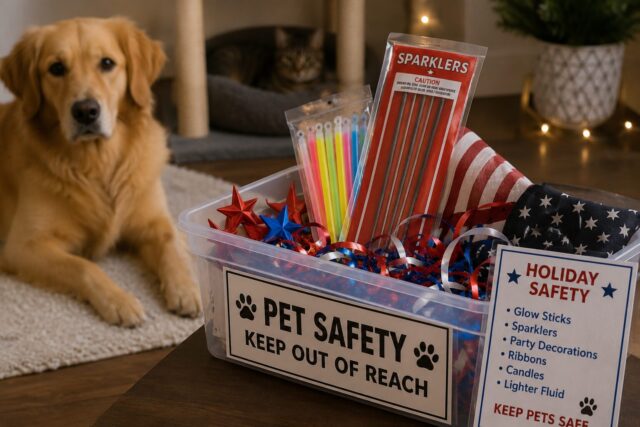
Holiday decorations can look harmless, but pets are curious. Glow sticks, ribbons, balloons, sparklers, citronella candles, lighter fluid, matches, insect repellents, and small decorations can all create problems.
Cats may bat at ribbons or chew string. Dogs may grab dropped party supplies. Puppies may swallow anything that smells interesting. Keep decorations high, trash covered, and party supplies stored safely.
Be cautious with candles and open flames. A wagging tail or curious cat can knock over a candle in seconds. If you use citronella products outdoors, keep pets away from them and do not allow licking, chewing, or spilled residue.
Do Not Ignore Emotional Safety
Pet safety is not only physical. Emotional safety matters too. A terrified pet is not “being dramatic.” They are responding to sounds and sensations they do not understand.
Some pets want to be close to their people. Others want to hide. Let your pet choose comfort when possible. Do not drag a cat out from under the bed. Do not scold a trembling dog. Do not punish barking caused by fear. Calm leadership works better than frustration.
Your voice matters. Your body language matters. Keep the evening predictable. Feed your pet at the normal time. Give potty breaks before fireworks begin. Keep routines steady.
This is also a tender holiday for people who have lost pets. Sounds, family gatherings, and memories can bring up grief. For those families, a Paws Beyond the Rainbow keepsake can be a meaningful way to honor a beloved furry baby who is no longer physically there, but still deeply loved.
Pet Safe Product Ideas for the 4th of July
The best products are the ones that solve real problems. Skip cute items that do nothing for safety. Focus on comfort, containment, hydration, identification, and calm.
Helpful options may include a secure collar with readable ID, a pet GPS tracker, a cooling mat, a refillable water bottle, a calming bed, a white noise machine, a crate cover, puzzle toys, lick mats, and pet safe treats.
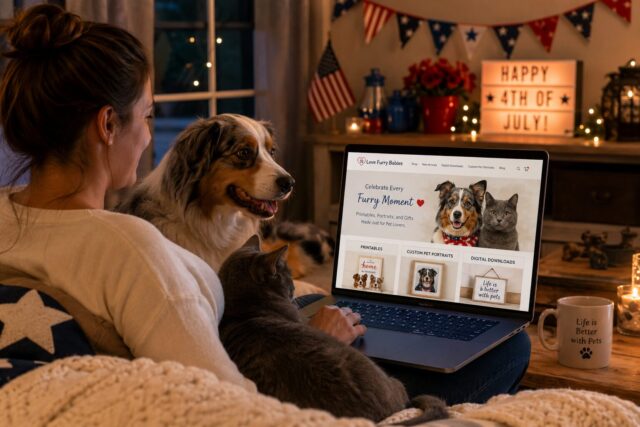
For Love Furry Babies readers, this is also a good time to prepare printable pet care pages, seasonal reminders, and thoughtful pet lover gifts. A custom pet portrait can celebrate the furry baby who makes every holiday special. Printable coloring pages and digital downloads can also give pet loving families something calm and cozy to enjoy indoors while fireworks are happening outside.
Suggested internal link: Read the Love Furry Babies summer pet safety blog for more warm weather tips.
Suggested internal link: Explore custom pet portraits for dog moms, cat moms, and pet lovers.
Suggested internal link: Learn more about Paws Beyond the Rainbow memorial keepsakes for honoring a beloved pet.
What to Do If Your Pet Gets Loose
If your pet escapes, act immediately. Do not wait until morning. Search close to home first. Many scared pets hide nearby. Bring a leash, flashlight, treats, and a calm voice. Call your pet gently. Do not chase, because chasing can make a frightened animal run farther.
Contact local shelters, animal control, veterinary offices, and neighbors. Post a clear photo online with your pet’s name, size, color, collar details, last known location, and your contact information. If your pet is microchipped, contact the microchip company right away to confirm your information is current and report your pet missing.
The best strategy is prevention, but fast action matters if prevention fails.
After the Fireworks: Check Your Pet and Your Yard
The holiday does not end when the noise stops. Some pets stay anxious for hours. Give them time to settle. Offer water. Take dogs out on a leash, even in a fenced yard, because they may still be jumpy.
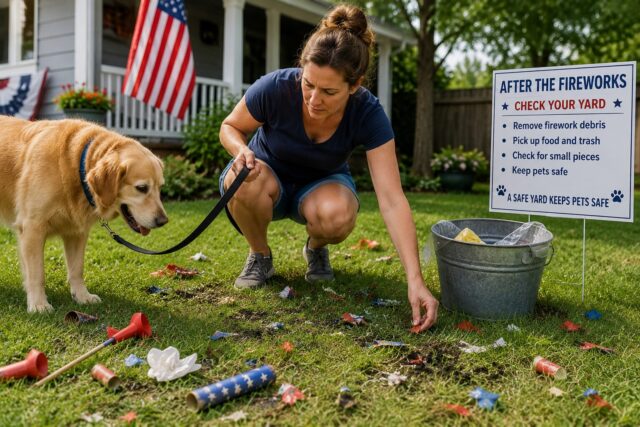
Check your yard for firework debris, food scraps, bones, skewers, wrappers, glow sticks, and trash before letting pets roam. If you hosted guests, check under tables, around chairs, near trash cans, and around the grill.
If your pet vomits, has diarrhea, seems weak, trembles excessively, has trouble breathing, collapses, or may have eaten something dangerous, contact your veterinarian or emergency clinic.
FAQ: 4th of July Pet Safety and Preparedness
Should I take my dog to a 4th of July fireworks show?
No. For most dogs, fireworks shows are stressful and unsafe. The noise, crowds, heat, and confusion can trigger fear and escape attempts. Your dog is safer at home in a quiet indoor space.
Can I give my pet something to calm them down?
Only give products approved by your veterinarian. Do not give human medication, alcohol, essential oils, or random calming products without professional guidance. If your pet has severe fear, call your veterinarian before the holiday.
What foods should pets avoid on the 4th of July?
Pets should avoid barbecue scraps, bones, corn cobs, onions, garlic, grapes, raisins, chocolate, alcohol, fatty foods, and anything sugar free that may contain xylitol. Keep trash secured because many pets get sick from leftovers.
How early should I walk my dog before fireworks?
Walk your dog earlier in the day before crowds, heat, and fireworks build. Use a secure leash and collar or harness. Once fireworks begin, keep potty breaks short and supervised.
What is the most important 4th of July pet safety step?
Keep pets indoors in a secure, calm space before fireworks begin. This single step helps prevent escapes, injuries, panic, and many holiday emergencies.
Conclusion: Protect Your Furry Baby Before the First Firework
4th of July pet safety and preparedness is not complicated, but it does require intention. Keep your pet indoors, plan ahead, avoid dangerous foods, protect them from heat, and create a quiet place where they can feel safe.
Your furry baby depends on you to understand what they cannot say. Fireworks may last one night, but the consequences of fear, escape, or poisoning can last much longer. Prepare early, stay calm, and make the holiday safer for the pets who trust you most.
👉 Shop here: https://www.etsy.com/shop/LoveFurryBabies
💌 Monthly newsletter launches the 1st with tips, fun facts and announcements:
https://preview.mailerlite.io/forms/2009060/175253019353416926/share
